Back to Blogs

Are Dental Bridges Right for Your Missing Teeth

Dental bridges restore missing teeth, prevent dental shifting, and renew chewing comfort in just two dental visits.

November 1, 2026
•
2 min read
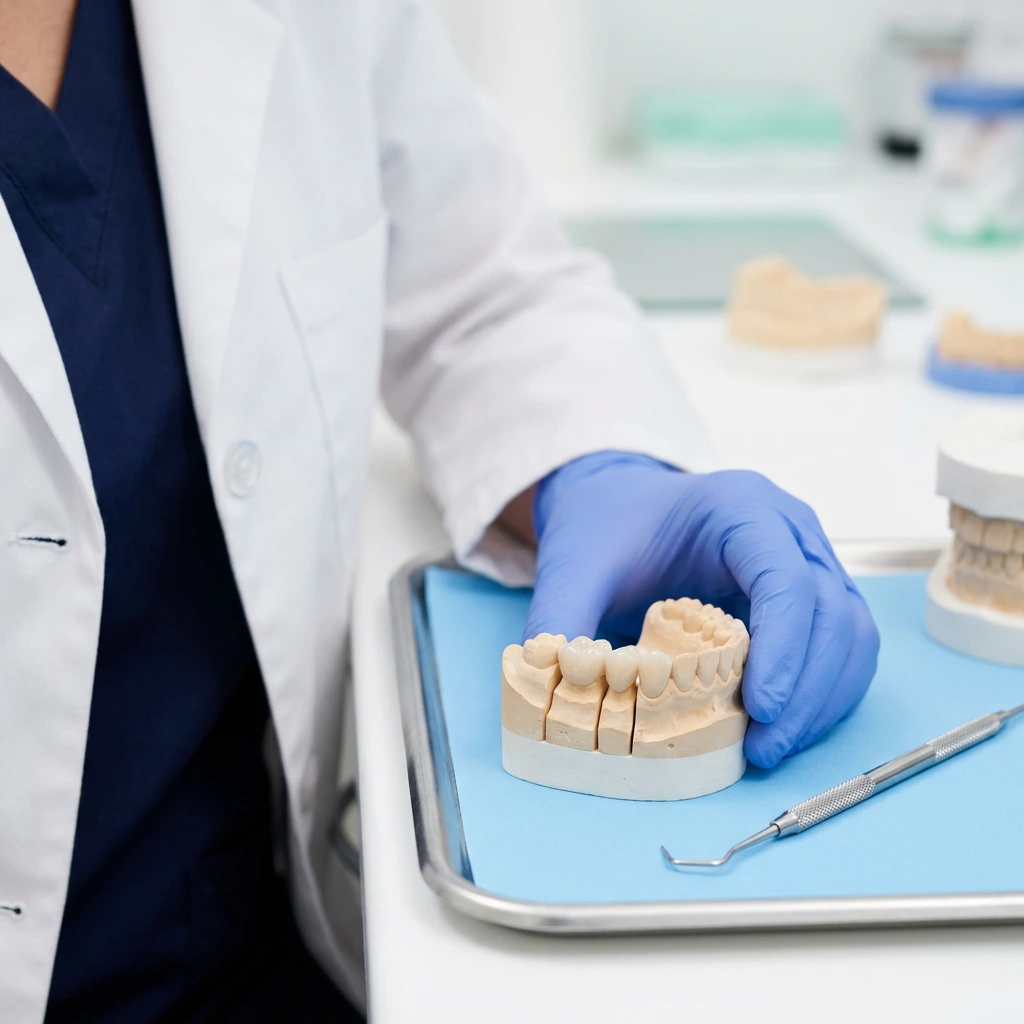
A clinician wearing a white coat and blue gloves holds a plaster dental cast featuring a dental bridge on a blue tray next to a dental tool.
Back to Blogs

Are Dental Bridges Right for Your Missing Teeth

A clinician wearing a white coat and blue gloves holds a plaster dental cast featuring a dental bridge on a blue tray next to a dental tool.

Dental bridges restore missing teeth, prevent dental shifting, and renew chewing comfort in just two dental visits.

November 1, 2026
•
2 min read

Restoring Gaps With a Dental Bridge

A dental bridge replaces one or more missing teeth by anchoring an artificial tooth to healthy adjacent teeth or stable dental implants. This restorative approach prevents natural teeth from drifting out of alignment, restores comfortable chewing, and supports facial contours without requiring removable appliances.

For many adults, it provides a dependable, natural-looking solution that lasts for years.

Grace, a marketing specialist in her early forties, began exploring tooth replacement after losing a lower molar. Chewing on her left side had become uncomfortable, and she noticed her surrounding teeth subtly shifting inward. She wanted a fixed restoration that felt completely secure during business dinners and daily conversations.

During her initial consultation at Rosedale Dental, Dr. Katie Hannon evaluated Grace’s oral health and reviewed her restorative possibilities. Understanding the mechanics of fixed bridges helped Grace determine whether this traditional approach aligned with her personal wellness goals.

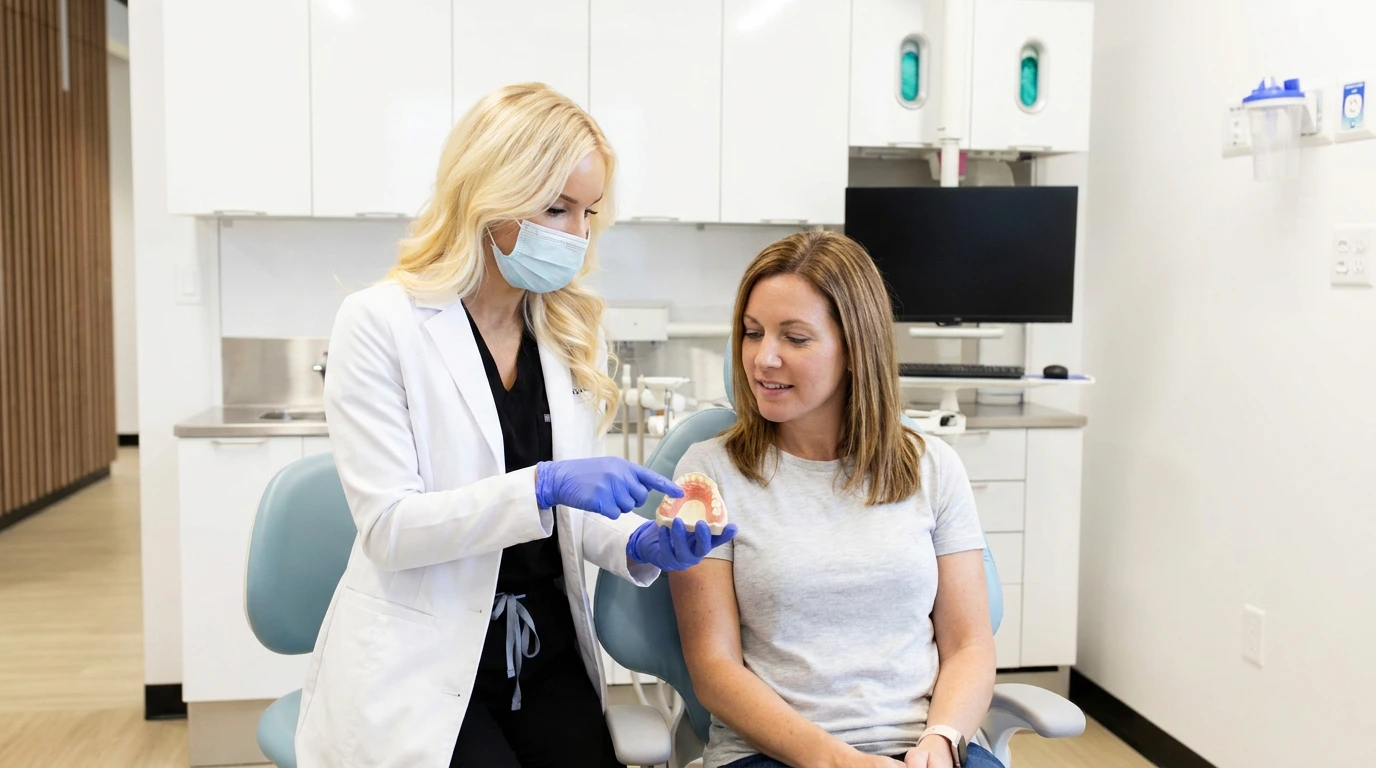
Katie wears a lab coat and mask as she shows a dental model to a patient seated in a dental chair in a modern clinic.

Bridge vs Implant for Missing Teeth

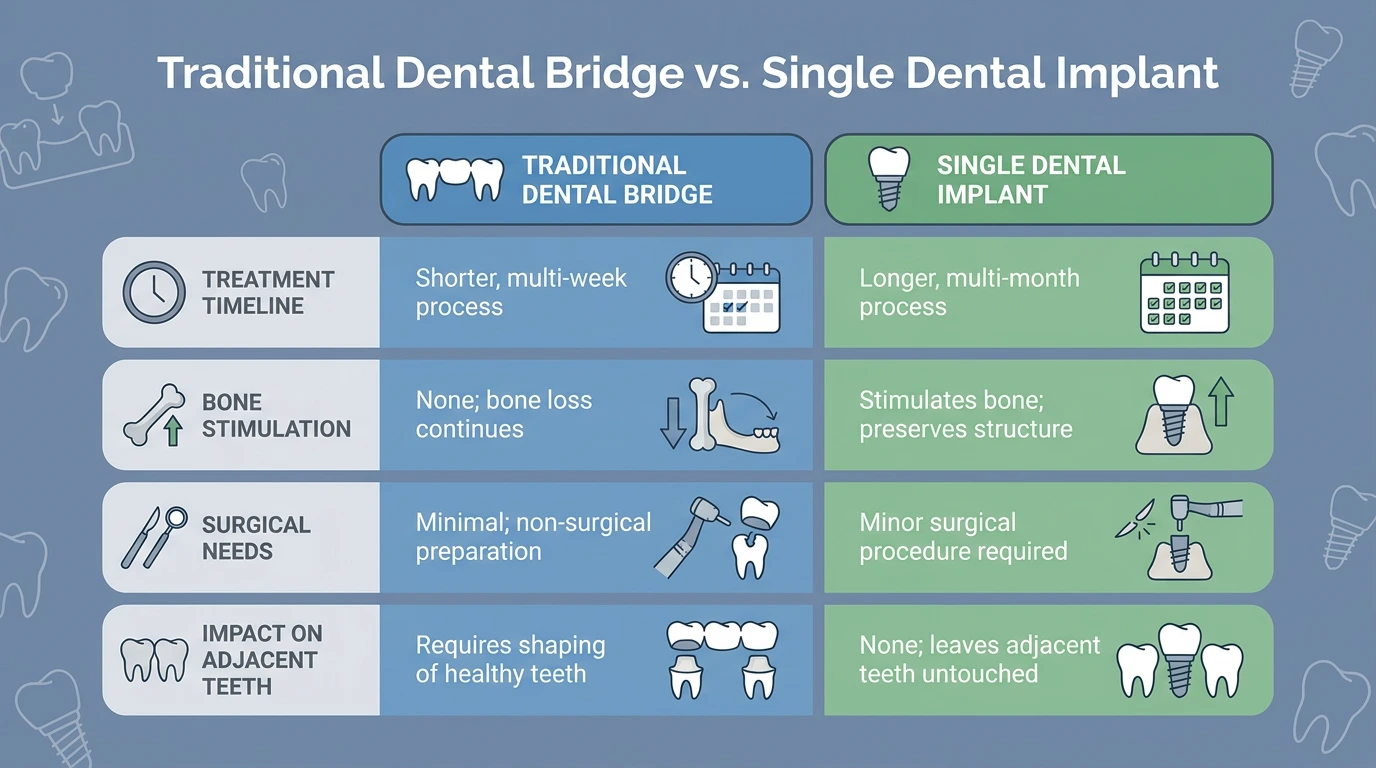
Deciding between a fixed bridge and an implant depends largely on jawbone density, treatment timeline preferences, and the condition of adjacent teeth. While an implant replaces an individual tooth root directly within the jaw, a bridge relies on neighboring teeth for support and can be placed in only two visits.

Grace weighed these factors carefully because she preferred a prompt, non-surgical restorative process. Dr. Katie Hannon explained that both treatments help prevent structural dental shifting and restore balanced biting forces.

Comparing Your Tooth Replacement Choices

  • Treatment timeline often favors a bridge, which is typically completed in two to three weeks, whereas dental implants require several months of bone integration.
  • Adjacent tooth structure must be reshaped to receive crowns for a traditional bridge, while an implant stands independently without altering neighboring enamel.
  • Bone preservation is stimulated directly by an implant post, whereas a conventional bridge rests above the gumline without stimulating deep jaw tissue.
  • Initial surgical requirements are absent with standard bridges, making them ideal for patients who prefer to avoid minor oral surgery.

For Grace, the speed and security of fixed bridge placement offered an appealing path forward without surgical healing delays.

Infographic comparing a traditional dental bridge with a single dental implant across treatment timeline, bone stimulation, surgical needs and impact on adjacent teeth.

Common Dental Bridge Options Explained

Dentists select from several distinct bridge designs depending on where the missing tooth was located and the strength of the surrounding teeth. Understanding these dental bridge options allows patients to make informed decisions alongside their dental team.

When Grace reviewed her treatment plan, she learned that her rear molar required significant structural stability to withstand daily chewing forces. Dr. Katie Hannon walked her through each category before finalizing her design.

Primary Types of Bridges

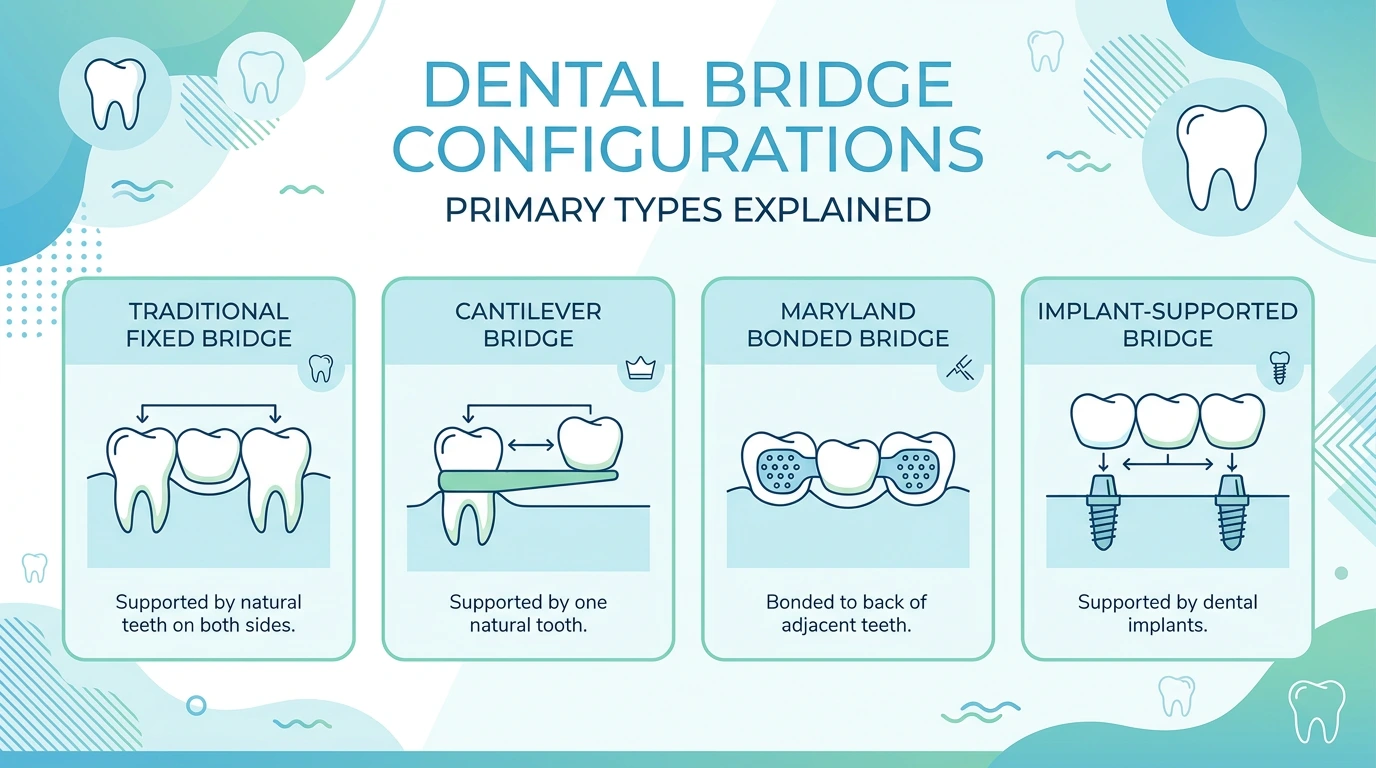
  • Traditional fixed bridges feature an artificial tooth suspended between two supportive crowns placed on healthy teeth on either side of the gap.
  • Cantilever bridges anchor to only one adjacent tooth, making them useful when healthy neighbors exist on just one side of an opening.
  • Maryland bonded bridges use discreet metal or ceramic wings bonded behind adjacent teeth, often chosen to replace missing front teeth with minimal enamel removal.
  • Implant-supported bridges span larger spaces by securing artificial teeth to two or more surgically placed implants rather than natural enamel.

Because Grace had two sturdy natural teeth bordering her empty space, a traditional porcelain bridge offered the ideal balance of strength and natural beauty.

An educational infographic displays four dental bridge types with labeled line diagrams: traditional fixed, cantilever, Maryland bonded, and implant-supported bridges on a light blue and teal background.

Steps in the Tooth Bridge Procedure

The typical tooth bridge procedure unfolds across two well-coordinated appointments designed for comfort and precision. During the first visit, the dentist prepares the supporting teeth and captures accurate impressions to ensure a precise, custom fit.

Dr. Katie Hannon gently reshaped the enamel on Grace's supporting teeth so the anchoring crowns would sit flush along her natural gumline. She then placed a smooth temporary bridge to protect the exposed teeth while the dental laboratory crafted the final restoration.

Grace wore her temporary restoration comfortably for two weeks while eating and speaking without hesitation. When she returned to the clinic, Dr. Katie Hannon checked the fit, adjusted her bite alignment, and bonded the finished dental bridge into place using durable dental cement.

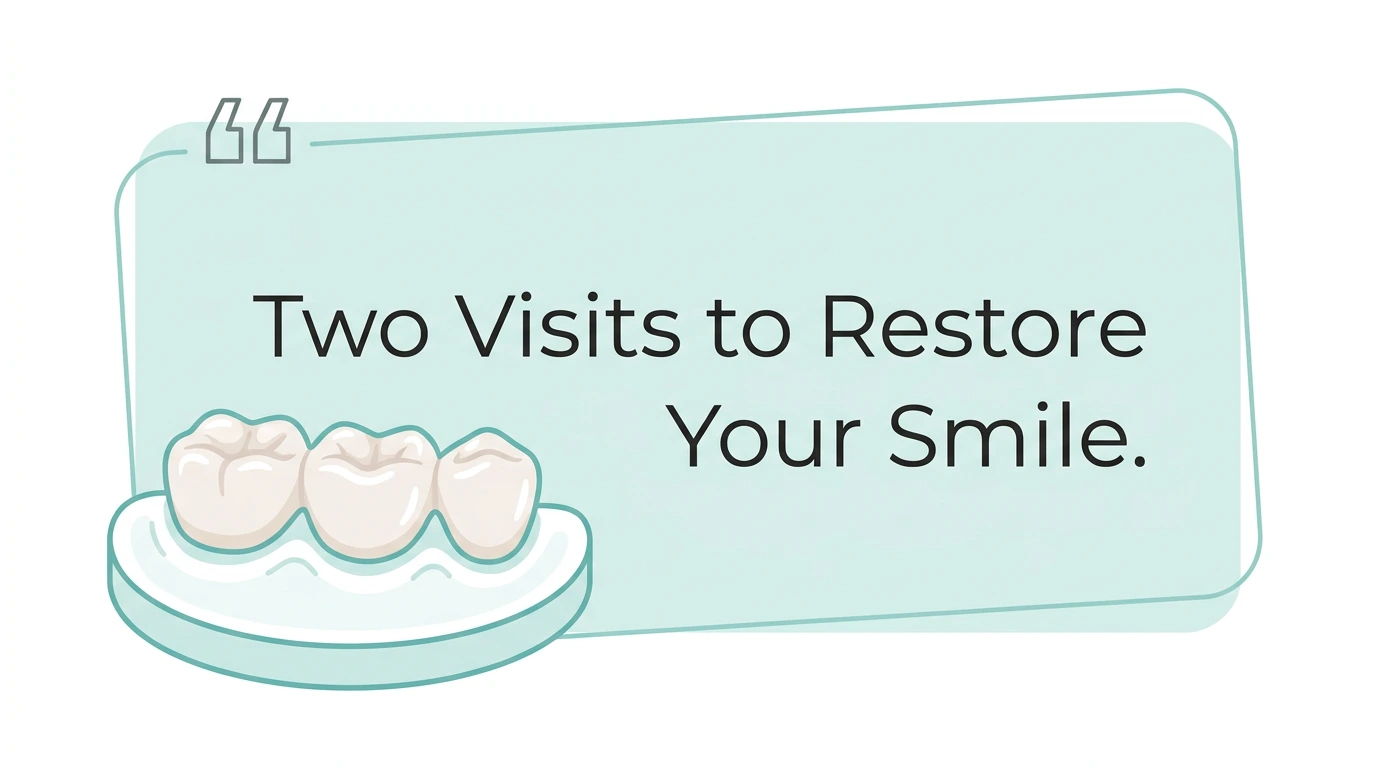
A light teal callout box displays the text Two Visits to Restore Your Smile beside an illustration of a three-unit dental bridge resting on a small tray.

Restore Your Smile With Rosedale Dental

Missing teeth can affect your comfort, speech, and long-term oral health. Contact our team at Rosedale Dental in Roseville, MN, to schedule a restorative consultation with Dr. Katie Hannon and discover the right tooth replacement solution for you.

Rosedale Dental reception area with a curved white front desk, a wood-slat ceiling with pendant lights and a patient seating area.

Who Qualifies for a Dental Bridge?

Ideal candidates for a fixed dental bridge possess healthy adjacent teeth, sound periodontal health, and sufficient overall wellness to maintain daily home hygiene. Evaluating these clinical baselines helps confirm that the underlying teeth can bear normal chewing forces for many years to come.

During her comprehensive dental exams & x-rays, Grace showed strong periodontal support with no active gum inflammation. Dr. Katie Hannon confirmed that her adjacent enamel was structurally sound and capable of supporting a multi-unit prosthesis.

Key Candidacy Indicators

  • Healthy anchor teeth must have robust roots and adequate natural structure to support custom crowns.
  • Firm gum tissue without active periodontal disease protects the restoration from premature loosening or chronic inflammation.
  • Balanced bite alignment helps ensure that everyday chewing pressure is distributed evenly across all teeth rather than concentrated on the bridge.
  • Consistent home care is vital, as plaque accumulation along the bridge margins can compromise supporting teeth.

These clinical criteria confirmed that Grace was an excellent candidate for long-term restorative treatment.

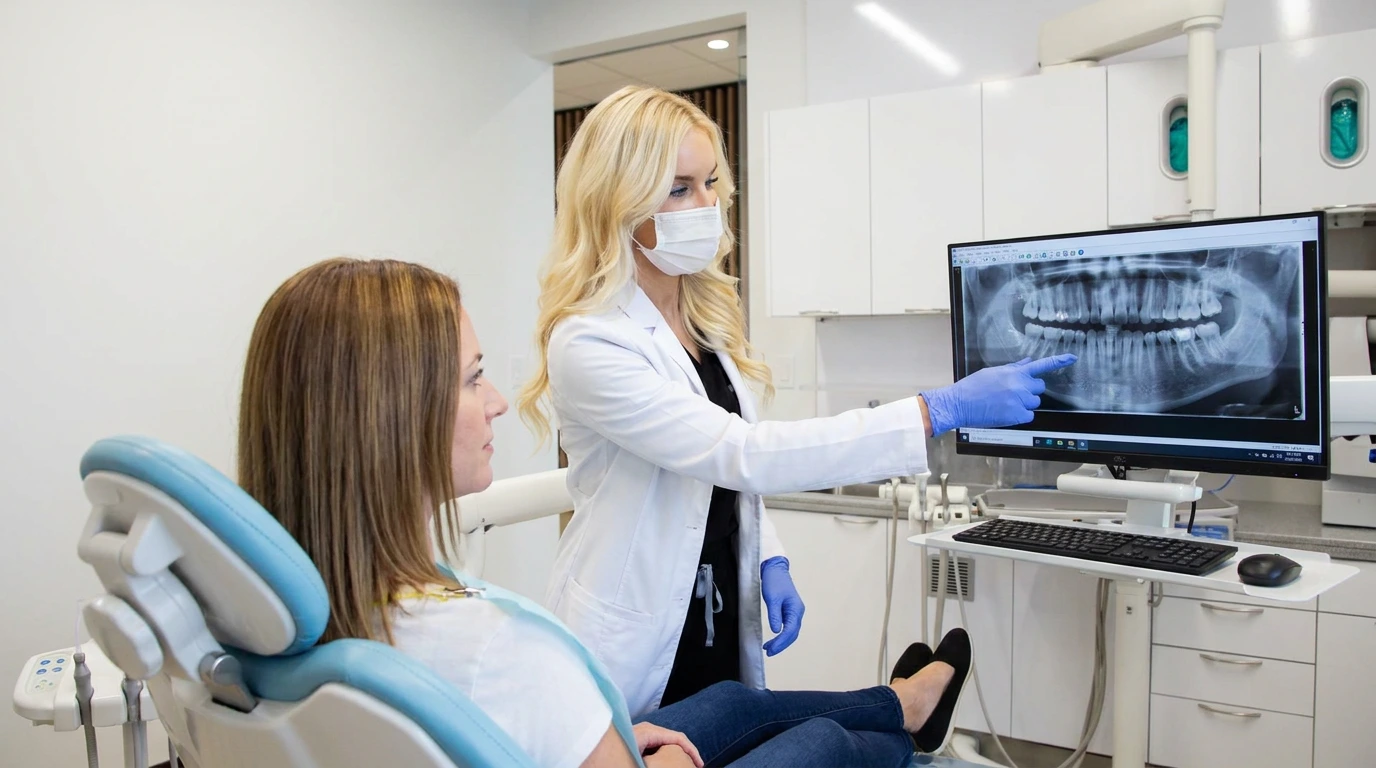
A dentist in a white coat, mask and blue gloves points to a dental X-ray on a monitor for a patient seated in the dental chair.

How to Clean and Maintain Dental Bridges

Caring for a dental bridge requires specialized flossing techniques to remove food particles and bacterial plaque beneath the artificial tooth. Because the replacement tooth sits directly above the gum tissue, maintaining cleanliness along the restorative margins is essential for preventing decay on anchor teeth.

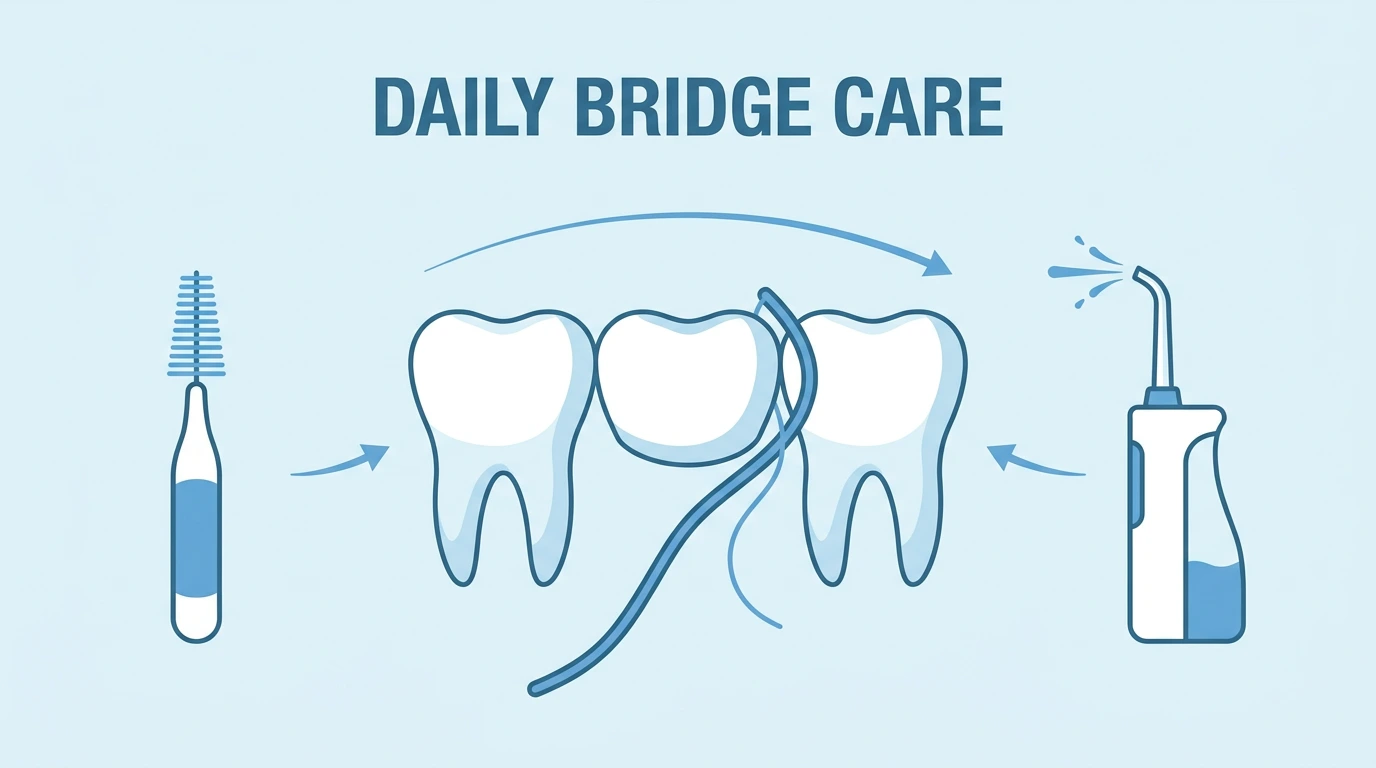
Dr. Katie Hannon demonstrated how to use floss threaders and small interdental brushes to sweep smoothly under Grace's new restoration. She reassured Grace that gentle daily cleaning takes less than two minutes once the habit feels familiar.

Grace quickly adapted to her refreshed routine by cleaning under her restoration every evening after brushing. Pairing dedicated home hygiene with regular dental cleanings helps keep the supporting gum tissue firm, pink, and free from irritation.

Infographic titled Daily Bridge Care showing a floss threader cleaning under a dental bridge, with an interdental brush and a water flosser.

Benefits of Choosing a Dental Bridge

A well-crafted dental bridge restores full chewing efficiency, prevents neighboring teeth from tipping into open spaces, and preserves a balanced smile. Choosing dental bridges in Roseville, MN provides patients with dependable structural support that looks natural alongside existing enamel.

Grace noticed an immediate improvement in her biting stability once her bridge was permanently placed. She no longer had to favor one side of her mouth while enjoying meals with friends.

Valuable Long-Term Advantages

  • Restored chewing capability allows patients to enjoy balanced meals without discomfort or jaw muscle fatigue.
  • Prevented dental drift keeps adjacent and opposing teeth securely aligned within the dental arch.
  • Natural appearance matches the subtle shade, translucency, and shape of adjacent teeth for a cohesive smile.
  • Clear speech articulation returns naturally when missing tooth spaces no longer disrupt airflow or tongue placement.

These functional improvements gave Grace renewed smile confidence and protected her overall bite alignment for the future.

A light teal graphic frame displays the text Balanced Chewing & Natural Alignment next to illustrations of a steaming bowl, wheat, olives, berries, and a tooth icon.

A Restored Smile in Roseville

Completing her restorative care gave Grace a renewed appreciation for seamless dental function. Her custom bridge blended effortlessly with her surrounding teeth, and eating crunchy foods felt completely natural again.

During her follow-up appointment, Dr. Katie Hannon verified that Grace's bite remained balanced and that her gum tissue adapted comfortably around the margins. Grace expressed relief that her treatment required only two visits and fit smoothly into her busy schedule.

Addressing tooth loss early protects oral health from progressive complications like shifting teeth and irregular bite wear. If you are experiencing gaps in your smile, schedule an exam to explore personalized restorative options designed to keep your teeth strong and functional.

A smiling woman eats salad with two friends at a sunlit outdoor cafe table.

Frequently Asked Questions

1. How long do dental bridges typically last?
A well-maintained dental bridge can last ten to fifteen years or longer when supported by diligent daily hygiene and regular dental checkups. Brushing twice daily, cleaning beneath the artificial tooth with floss threaders, and attending routine professional exams help protect the underlying anchor teeth from decay. Dr. Katie Hannon checks restoration stability during every preventive visit.

2. Is getting a dental bridge uncomfortable?
The preparation and placement appointments are designed for patient comfort using local numbing to keep the area comfortable. Patients may experience mild sensitivity in the supporting teeth for a few days following enamel shaping, but this sensation subsides quickly. Dr. Katie Hannon checks that the temporary and permanent bridges fit harmoniously with your natural bite.

3. Can a dental bridge be repaired if it chips?
Small cosmetic chips in the porcelain surface can sometimes be smoothed or bonded with tooth-colored composite resin during an office visit. However, if an anchor tooth develops decay or the framework suffers significant structural damage, Dr. Katie Hannon may recommend replacing the bridge to ensure continued protection and dependable chewing function.

4. How do I clean food from under my dental bridge?
You can clean beneath an artificial bridge tooth using specialized floss threaders, flexible interdental picks, or water flossers that guide cleaning material under the suspended restoration. Daily cleaning removes trapped plaque and food debris before bacteria can harm the supporting teeth. Dr. Katie Hannon demonstrates these simple techniques during your final placement appointment.

5. What foods should I avoid with a new bridge?
For the first few days after placement, avoid extremely sticky candies, hard nuts, and ice cubes that could dislodge your temporary bridge or stress your new permanent restoration. Once your permanent bridge is fully cemented, you can enjoy normal foods comfortably, though chewing non-food objects like pens or fingernails should always be avoided.

6. Will my dental bridge look natural?
Custom dental bridges are crafted from high-grade dental ceramics matched precisely to the shade, shape, and translucency of your adjacent natural teeth. Dr. Katie Hannon evaluates your facial aesthetics and smile line so your completed bridge looks cohesive, flattering, and natural alongside your enamel.


Ready to Love Your Smile?

Get the healthy, confident smile you deserve with expert dental care in Roseville, MN. At Rosedale Dental, we offer personalized treatments that help you look great, feel comfortable, and enjoy long-term oral health. Call now or book online to schedule your dental appointment today.

Book Your Appointment Today

Now Welcoming New Patients

Office Hours

Ready to make an appointment? We can't wait to welcome you to our dental family!

  • Mon: 7:30 AM – 4:30 PM
  • Tue: 7:30 AM – 4:30 PM
  • Wed: 7:30 AM – 4:30 PM
  • Thu: 7:30 AM – 4:30 PM
  • Fri: Closed

Location

1781 County Road B West, Roseville, MN 55113

Thank you for booking your appointment!

We’ve received your request and will contact you soon to confirm the details. We look forward to seeing you at Rosedale Dental!

Oops! Something went wrong while submitting the form.
Related Blog Posts

Stay Informed with Expert Insights & Tips About Dental Care

A woman checking her teeth on the front camera of her phone.
10.7.2026

Your Smile Transformation Guide to Porcelain Veneers

Porcelain veneers offer a durable, aesthetic solution for chips, gaps, and discoloration, transforming your smile with a natural appearance and lasting results.

Steven sits in a cream armchair, covered by a beige blanket, holding a light gray ice pack to his right jaw, looking out a window.
9.9.2026

Restoring Your Confident Smile With Dental Implants

Dental implants provide a stable, natural-looking solution for missing teeth, restoring function and confidence with proper care.

Linda, a woman with graying hair, leans on a wooden kitchen counter and bites into a red apple, with a potted plant on the windowsill behind her.
8.6.2026

What You Should Know About Dental Crowns

Dental crowns restore strength, shape, and appearance to damaged teeth, offering a durable and aesthetic solution for lasting oral health.